BPC-157 for Muscle Repair
What Is BPC-157 and Why Do Researchers Study It?
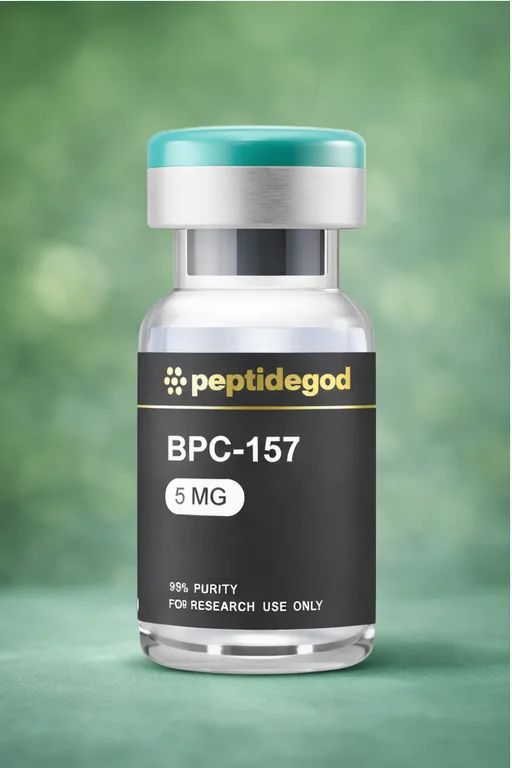
BPC-157, short for Body Protection Compound-157, is a synthetic pentadecapeptide consisting of 15 amino acids derived from a naturally occurring protein found in human gastric juice. Its sequence is Gly-Glu-Pro-Pro-Pro-Gly-Lys-Pro-Ala-Asp-Asp-Ala-Gly-Leu-Val. Unlike many peptides that degrade rapidly in biological environments, BPC-157 demonstrates notable stability in both gastric acid and physiological conditions, which has made it a subject of sustained interest in preclinical research. Scientists investigating tissue regeneration have focused on its apparent ability to accelerate the repair of skeletal muscle, tendon, ligament, and connective tissue in animal models. This stability and multi-tissue applicability distinguish it from more narrowly targeted growth factors and have driven a substantial volume of peer-reviewed investigation since the early 1990s.
Mechanisms Behind Muscle Repair
The cellular mechanisms through which BPC-157 may support muscle repair are multifaceted. Research in rodent models consistently points to upregulation of growth hormone receptor expression in tendon fibroblasts and satellite cells, the progenitor cells responsible for skeletal muscle regeneration after injury. By sensitizing these cells to endogenous growth hormone, the peptide appears to amplify anabolic signaling without directly introducing exogenous hormones into the system. Additionally, BPC-157 has been shown to modulate the nitric oxide system, promoting vasodilation and improving local blood flow to damaged tissue — a critical factor in delivering oxygen and nutrients required for repair.
Studies have also examined BPC-157's interaction with the FAK-paxillin pathway, a signaling cascade involved in cell migration and adhesion. Enhanced activity in this pathway supports the movement of myoblasts and fibroblasts into injury sites, accelerating the formation of new tissue architecture. Parallel research points to reduced expression of pro-inflammatory cytokines such as TNF-alpha at injury sites, suggesting an anti-inflammatory component that may limit secondary damage during the acute phase of muscle injury.
Evidence from Preclinical Studies
The majority of data on BPC-157 for muscle repair comes from in vivo rodent experiments. In one frequently cited study, rats with surgically transected quadriceps muscles treated with BPC-157 showed significantly faster restoration of muscle continuity and contractile function compared to controls. Histological analysis revealed earlier vascularization of the repair zone, denser collagen cross-linking, and more organized myofiber alignment in treated animals. Similar findings have been replicated in models involving crush injury, ischemia-reperfusion damage, and laceration of the gastrocnemius muscle.
Beyond direct muscle tissue, BPC-157 has been studied at the musculotendinous junction — an area particularly vulnerable to sports-related injury. Animal data suggest accelerated tendon-to-bone healing when BPC-157 is administered either systemically or locally, which is relevant because incomplete tendon repair is a common limiting factor in overall muscle function recovery. Researchers exploring the full range of bpc 157 benefits have noted that these effects appear dose-dependent within the ranges studied, typically 1–10 micrograms per kilogram of body weight in rodent protocols.
Routes of Administration in Research Contexts
Preclinical studies have used several administration routes to deliver BPC-157, each with different implications for bioavailability and tissue targeting:
- Intraperitoneal injection: most common in rodent studies, providing rapid systemic distribution
- Intramuscular injection at or near the injury site: used to assess local versus systemic effects
- Oral administration: studied because BPC-157 retains activity in the gastrointestinal tract, raising questions about systemic absorption from oral dosing
- Subcutaneous injection: employed as a more clinically translatable delivery method in some protocols
The oral route is particularly noteworthy. Several studies have demonstrated that orally administered BPC-157 produces measurable systemic effects in rodents despite the harsh digestive environment, which researchers attribute to the peptide's exceptional acid stability. This finding has broadened discussion of bpc 157 benefits beyond injectable research paradigms and into oral bioavailability science.
Current Research Limitations and Future Directions
Despite a robust body of preclinical literature, BPC-157 has not yet completed formal randomized controlled trials in humans for muscle repair indications. The gap between animal model findings and validated human outcomes remains the central limitation of the current evidence base. Researchers have called for standardized dosing protocols, longer observation periods, and imaging-based outcome measures to bridge this gap. There is also ongoing scientific discussion about optimal timing of administration relative to injury — whether pre-treatment, immediate post-injury dosing, or delayed intervention yields the greatest benefit.
The broader landscape of bpc 157 benefits research continues to expand into areas including neuroprotection, gut barrier integrity, and bone healing, which may eventually inform cross-tissue repair strategies. For now, all research on BPC-157 remains at the preclinical and investigational stage. This article is intended for informational and research purposes only and does not constitute medical advice. BPC-157 is a research peptide not approved by regulatory agencies for therapeutic use in humans.
 30 capsules.webp)
 60 capsules.webp)